Common Gutter Problems Unique to South Florida's Tropical Climate
September 07, 2026
 South Florida
's tropical environment places extreme stress on residential and commercial building exteriors. Intense midday heat, coastal salt air, heavy humidity, and sudden tropical downpours create harsh conditions for exterior systems. Roof drainage channels that perform adequately in drier climates often fail rapidly here. Understanding the specific gutter failures unique to South Florida allows property owners to address minor issues before they turn into costly structural repairs.
The Domino Effect: Why "Small Leaks" Cause Major Structural Damage
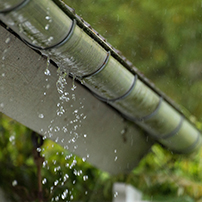
Many property owners view a dripping gutter joint or minor overflow as a simple cosmetic nuisance. In South Florida's humid climate, however, small leaks trigger a rapid chain reaction of structural decay:
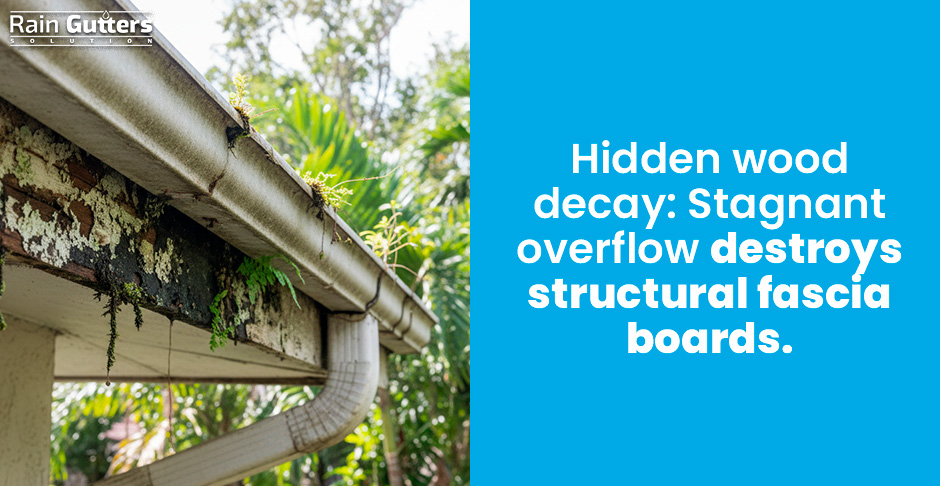
- Fascia and Rafter Rot: When water overflows the back edge of a gutter, it saturates the wooden fascia board and rafter tails. High humidity prevents the wood from drying, leading to rapid fungal decay, rot, and structural weakening.
- Pest Intrusion: Damp, decaying fascia wood creates ideal entry points for subterranean termites, carpenter ants, roof rats, and wasps right along your roofline.
- Foundation and Slab Cracking: Water dripping consistently onto the same perimeter spot erodes topsoil, saturates the ground beneath slab footings, and causes foundation displacement.
Four Primary Gutter Failures Caused by Florida Weather
1. Thermal Expansion Joint Separation
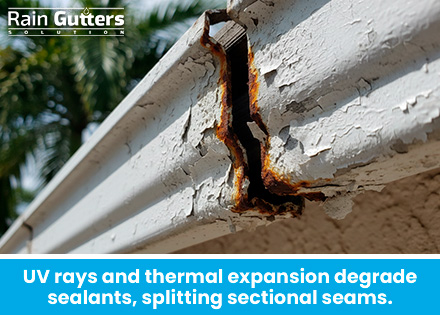
South Florida surfaces experience extreme temperature swings, heating up rapidly under direct sun and cooling quickly during sudden rain showers. This constant expansion and contraction causes metal channels to shift. On sectional gutters connected with sealants and rivets, this thermal movement tears sealant joints apart, creating persistent leaks every 10 to 20 feet.
2. Fastener Failure and Structural Sagging
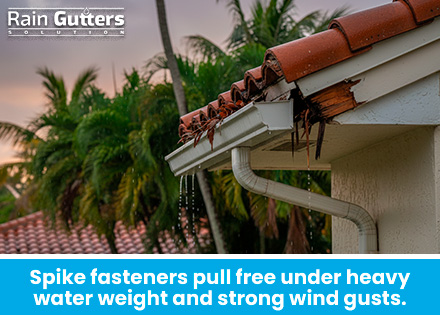
Older gutter installations often used "spike and ferrule" fasteners large metal nails driven directly into fascia boards. Over time, moisture weakens the surrounding wood, causing spikes to back out under the weight of water-logged leaves. The gutter sags, loses its drainage pitch, and allows water to pool in the center.
3. High-Velocity Storm Washout
Standard 5-inch residential gutters often cannot handle the sheer volume of tropical downpours that drop multiple inches of rain per hour. Water rushes over the front edge, washing away landscaping, eroding mulch beds, and flooding patio entryways.
4. Salt Air Corrosion
Properties located within a few miles of the ocean face continuous salt fog exposure. Low-grade steel fasteners, unpainted metal edges, and cheap sectional aluminum corrode prematurely, turning brittle and breaking under storm loads.
Local Solutions and System Upgrades
Solving these local climate challenges requires materials and installation techniques designed for severe coastal weather:
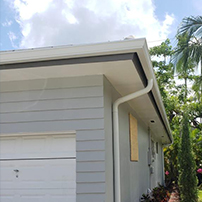
- Transition to Continuous Seamless Runs: Upgrading to a professional seamless gutter service eliminates mid-run joints entirely. Without seams to crack or leak, water moves cleanly to downspout outlets without threatening your fascia boards.
- Heavy-Duty Hidden Hangers: Replacing outdated spikes with internal heavy-duty hidden hangers secured by stainless steel screws ensures your gutters stay firmly anchored to rafter tails during tropical storm winds.
- Sizing Up for High Volume: Upgrading to 6-inch or 7-inch modern gutters or custom gutters increases water capacity by over 40%, preventing edge overflow during severe downpours.
- Targeted Structural Repairs: If your system has minor damage, a timely rain gutter repair service can re-anchor loose runs, seal corner miters, and replace damaged sections before water reaches your foundation.
Complete Perimeter Care
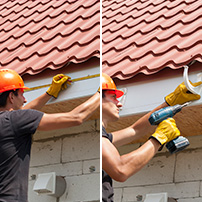
To maintain uninterrupted drainage, combine sturdy hardware with routine maintenance. Scheduling regular rain gutter cleaning keeps channels free of heavy debris, while adding specialized gutter accessories such as high-flow outlets and micro-mesh guards ensures long-term performance.
When replacing an old system entirely, a professional
rain gutter installation using heavy-gauge materials protects your property value for years to come.
Do Not Let Small Leaks Compromise Your Home's Value
Address minor drainage leaks today before they turn into expensive wood rot and foundation repairs.
A dripping gutter joint might seem minor, but in South Florida's humid climate, unchecked water flow rapidly rots fascia boards, attracts pests, and damages concrete foundations. Protect your home with heavy-duty, weather-resistant drainage solutions engineered specifically for local weather demands. Whether you need minor seam repairs, hanger upgrades, or a complete seamless installation, our team delivers reliable protection.
👉 Contact Our Repair & Installation Experts Today at
(305) 270-7779 or fill out the
contact form for a Free Inspection.